If you live in Houston, you already know the air can feel like a wet towel from May to October. What many homeowners don’t realize is that their hardwood floors feel it too. Wood is hygroscopic. It constantly absorbs and releases moisture to match the air around it. As it does, every board swells and shrinks a little across its width.
A little movement is normal. Big swings are what cause problems: gaps, cupping, crowning, squeaks and finish cracks. The good news is that most of it is preventable.
The number that matters: indoor relative humidity
Wood flooring manufacturers and industry guidelines generally recommend keeping indoor relative humidity in a moderate, steady range, commonly cited as roughly 35-55%. The exact target can vary by product, so check your flooring’s warranty. A simple digital hygrometer costs less than a dinner out and tells you exactly where your home stands.
Quick check: put a hygrometer in the room with the most hardwood and note readings morning and evening for a week. Consistent readings matter as much as the number itself.
Summer: watch for cupping
Long, humid summers are the hardest season on Gulf Coast floors. When boards absorb more moisture from below than above, from a damp slab, crawlspace or plumbing leak, the edges rise and the floor “cups.”
- Keep the A/C running, even when you travel. Turning it off for a week in August is a common cause of cupping.
- Avoid setting the thermostat so high that the system rarely cycles. It’s the A/C that removes moisture.
- Run bathroom and kitchen exhaust fans, and fix dripping fixtures promptly.
- After storms or flooding, call early. Water-damaged floors can often be saved if they dry correctly.
Winter: expect small gaps
When cold fronts move through and the heat runs, indoor air dries out and boards shrink, opening thin gaps between them. Hairline seasonal gaps are normal and usually close again in spring. If they’re wide enough to catch a coin, consider a humidifier, and don’t fill seasonal gaps with wood filler. It will crack or squeeze out when the boards expand again.
Spring & fall: the best time to refinish
Moderate weather means more stable humidity, which helps finishes dry and cure predictably. If you’re planning a refinish or a new install, these seasons are popular, so book your estimate early.
Choosing flooring for a humid climate
If you’re installing new floors, the product and the process both matter:
- Engineered hardwood is more dimensionally stable than solid wood, and is the usual choice over concrete slabs.
- Narrower boards move less than wide planks of the same species.
- White oak, especially rift or quartersawn, is relatively stable; hickory moves more and needs careful acclimation.
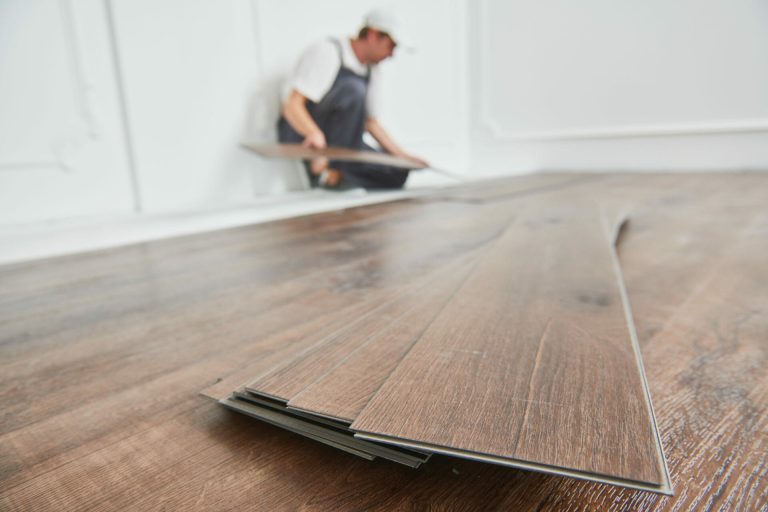
- Insist on moisture testing of the subfloor or slab and proper acclimation before installation.
When to call a pro
Call us if boards stay cupped for weeks, if you see crowning or buckling, if there’s a musty smell, or if a leak has soaked the floor. We’ll take moisture readings, find the cause and recommend the least invasive fix, which is very often a repair and refinish, not a replacement.